
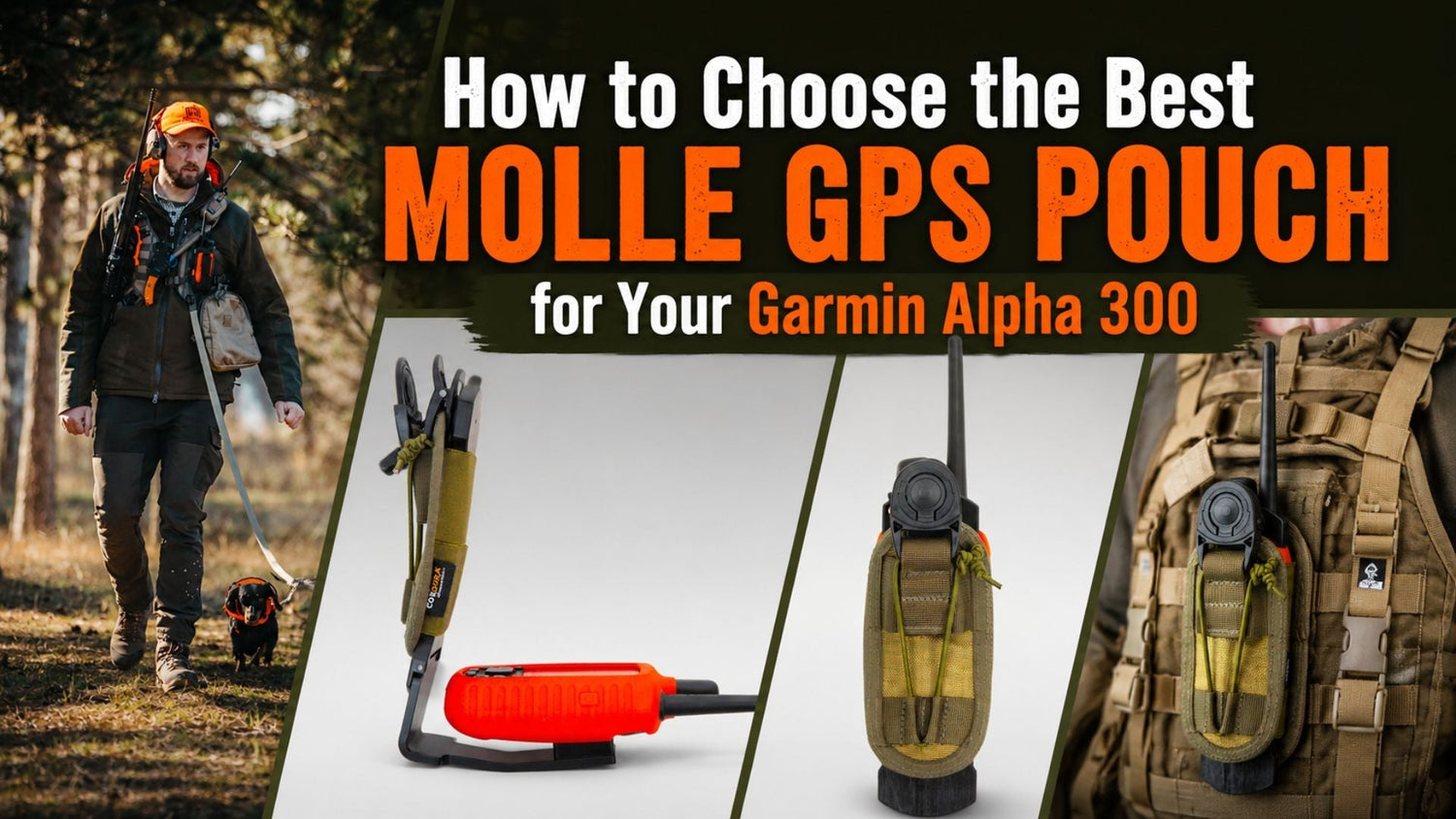
When navigating rugged backcountry, managing hunting packs, or tracking hounds across dense wilderness, keeping your Garmin Alpha 300 accessible, protected, and secure is essential. The Garmin Alpha 300 represents a serious investment in high-performance tracking and training tech. Leaving it exposed to harsh elements, dangling loosely from a lanyard, or buried inside a pack pocket compromises both reaction speed and gear longevity.
That is why choosing the right tactical carrier—specifically a dedicated MOLLE GPS pouch or specialized Garmin Alpha 300 holster—is a critical setup decision for hunters, outdoor guides, and tactical handlers.
In this comprehensive buyer's guide, we break down everything you need to evaluate when choosing a tactical pouch or chest holster for your Garmin Alpha 300, ensuring your device remains operational, protected, and immediately readable in the field.
Key Features to Look for in a Garmin Alpha 300 Holster
Not all tactical pouches are built to withstand heavy brush, downpours, or constant field movement. Standard utility pouches often fail to secure specialized handhelds, leading to screen damage, lost signal alignment, or cumbersome retrieve-and-stow cycles.
When shopping for high-performance outdoor gear at Saltstone Outdoor Hardware, look for these non-negotiable construction features:
                       ┌─────────────────────────────────────────┐
                       │  ESSENTIAL ALPHA 300 HOLSTER FEATURES   │
                       └────────────────────┬────────────────────┘
                                            │
        ┌───────────────────┬───────────────┴───────────────┬───────────────────┐
        ▼                   ▼                               ▼                   ▼
┌──────────────┐    ┌──────────────┐                ┌──────────────┐    ┌──────────────┐
│  Flip-Open   │    │ Spine-Mount  │                │ MOLLE / PALS │    │ Weatherproof │
│  Hinge Mechanism  │ Compatibility│                │ Integration  │    │  Materials   │
└──────────────┘    └──────────────┘                └──────────────┘    └──────────────┘
1. Hands-Free Flip-Open Viewing
The primary advantage of a high-tier Garmin Alpha 300 holster is rapid hands-free visual access. A flip-open hinge design allows the carrier to fold downward at a 90-degree angle directly on your chest or shoulder strap. This enables immediate status checks on your dog’s location or waypoint navigation without unclipping or detaching the handheld.
2. Spine-Mount Channel Integration
Garmin handhelds feature a specific spine-mount attachment system on the back housing. A tailored MOLLE pouch or rigid holster engineered for Garmin devices utilizes this precise spine-mount track, locking the device securely in place to eliminate rattling or shifting during movement.
3. PALS & MOLLE Attachment Versatility
A true tactical pouch must seamlessly interface with standard PALS (Pouch Attachment Ladder System) webbing. Whether mounted horizontally on a tactical chest rig, vertically on a backpack shoulder strap, or directly onto an integrated hunting vest, flexible attachment channels are essential for customizable loadouts.
4. Antenna Clearance and Port Protection
The Garmin Alpha 300 features a long VHF tracking antenna and top-facing control dials. The ideal carrier provides unobstructed antenna elevation for maximum signal reach, while simultaneously shielding the touchscreen and protecting charging ports from dirt and debris.
Material & Construction Standards for Heavy Field Use
The longevity of your tactical carrier depends entirely on material quality and stitching integrity. Low-grade synthetic fabrics often fray under constant friction against thorns and rock faces.
-
Heavy-Duty Tactical Nylon: Look for high-denier (500D to 1000D) Cordura or reinforced tactical nylon weaves that resist tears, abrasions, and moisture absorption.
-
Impact-Resistant Composites: Rigid structural components—such as the spine mount, flip hinge, and retention brackets—should be molded from high-impact polymer composites that tolerate sub-zero temperatures without becoming brittle.
-
Reinforced Hardware & Buckles: Quick-release buckles, snap snaps, and swivel clips must be engineered to withstand lateral pull forces under extreme outdoor loads.
Evaluating Ergonomics and Mounting Positions
Where and how you carry your GPS directly impacts your efficiency in the field. Depending on your primary activity, consider these popular mounting configurations:
| Mounting Style | Best For | Operational Advantage |
| Chest Rig / Vest Mounting | Upland hunting, hound tracking, active walking | Keeps the touchscreen directly in your field of view for quick hands-free map checks. |
| Backpack Shoulder Strap | Backpacking, alpine trekking, land surveying | Elevates the VHF antenna high on your torso, optimizing satellite and collar signal transmission. |
| Belt / Waist Attachment | Quick tactical maneuvers, compact field work | Maintains a low profile on duty belts while keeping shoulder areas clear for firearm mounting. |
If you need a purpose-built tactical carrier engineered specifically for upland hunting and active field tracking, check out the featured MOLLE GPS Pouch & Garmin Alpha 300 Holster at Saltstone. Designed with ultra-tough composite hardware and instant flip-down viewing, it delivers the ideal balance of field protection and operational speed.
Maintenance Tips for Tactical GPS Carriers
To ensure your carrier maintains optimal retention and long service life:
-
Clean Dirt and Mud Promptly: Rinse off dried dirt and mud with lukewarm water and a soft brush after heavy hunts to prevent abrasive grit from wearing down polymer hinges or spine mounts.
-
Inspect Retention Tabs Regularly: Check clip locks and spine tension periodically to ensure your handheld seats with a firm, audible click.
-
Air Dry Fully: Allow nylon webbing and composite backing to dry completely in a ventilated area before storing away with your navigation electronics.
Suggest to Read:- How to Choose the Best Upland Hunting Vest with a Rifle Carry System
Frequently Asked Questions (FAQs)
Q1. Is a MOLLE GPS pouch compatible with other Garmin handheld models?
Yes. Holsters and pouches utilizing the standard Garmin spine-mount system are compatible with a wide range of devices, including the Garmin Alpha 200, Alpha 300/300i, GPSMAP 66/67 series, and Oregon series units. Always verify specific dimensional fit prior to purchasing.
Q2. Why choose a rigid flip-open holster over a traditional zippered pouch?
Zippered pouches require two hands to open, retrieve, and hold the unit while navigating. A rigid flip-open Garmin Alpha 300 holster drops down 90 degrees instantly, allowing quick, one-handed or hands-free map viewing without detaching your device.
Q3. Will mounting the pouch on my chest interfere with VHF collar signals?
No. Mounting your carrier on your chest or shoulder strap keeps the handheld elevated, which generally improves line-of-sight signal transmission compared to carrying the unit inside a deep pocket or low hip pouch.
Field-Tested Hardware for Uncompromised Navigation
Protecting your primary navigation and dog tracking system is vital when operating off the grid. Upgrading to a custom-fit MOLLE GPS pouch ensures your touchscreen stays safe from impact while granting immediate, reliable access whenever you need to check your path.
Explore top-tier outdoor gear, tactical holsters, and field equipment directly at Saltstone Outdoor Hardware.
Saltstone
-
Contact Phone: +1 (561) 232-6195
-
Contact Email: customerservice@saltstone.shop