
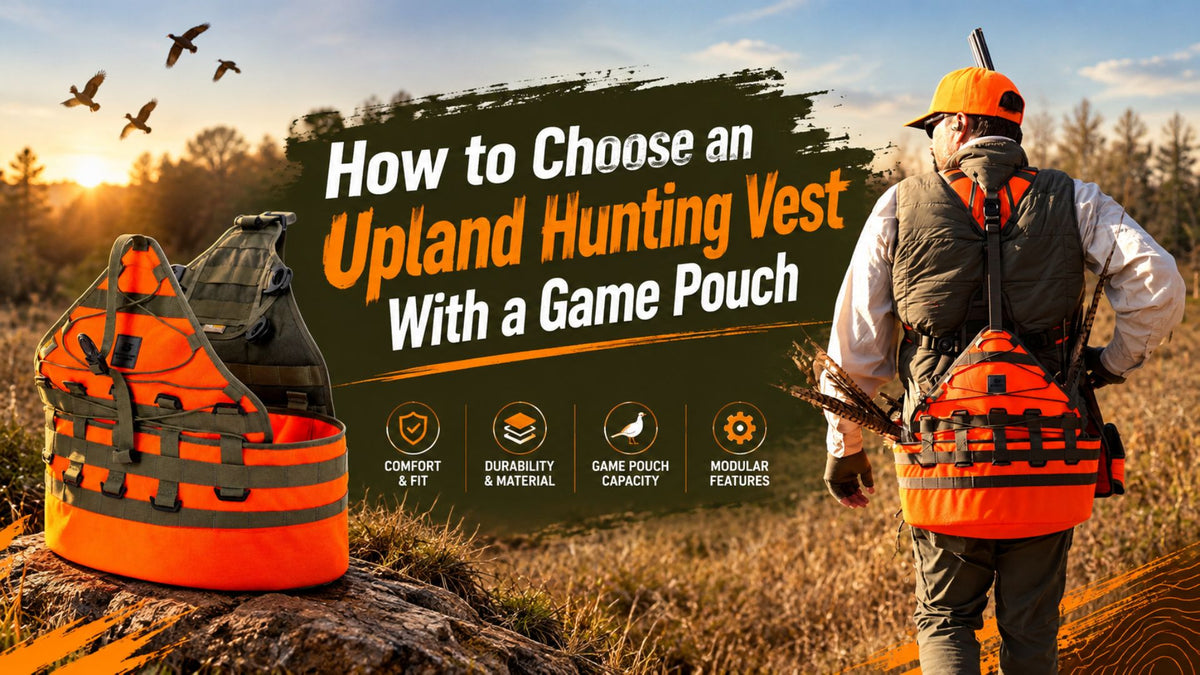
Choosing the right upland hunting vest can make a meaningful difference in how you organize equipment, carry harvested birds, and move through the field. Whether you hunt pheasants across open grasslands, pursue quail through dense cover, or spend long days walking with a bird dog, your gear should support your hunting style without creating unnecessary bulk or restricting movement.
An upland hunting vest with game pouch combines practical storage with a dedicated space for carrying harvested birds and other small game. However, not every vest offers the same capacity, fit, material quality, or attachment options. Understanding these differences helps you choose hunting equipment that suits your needs and the conditions you encounter.
In this guide, we explain the essential features to evaluate, how to choose an appropriate game pouch, and what to consider when investing in a bird hunting vest for your next outing.
1. Why Choose a Hunting Vest With a Game Pouch?
Traditional hunting vests often provide pockets for ammunition, calls, and personal essentials. A dedicated rear game pouch adds another important function: carrying harvested birds without requiring a separate bag or repeatedly rearranging equipment.
A well-designed bird hunting vest with game pouch can help you keep essential items organized while making longer walks more manageable. Depending on its design, a rear pouch can provide hands-free storage, keep game separate from smaller accessories, and leave your hands available for navigating uneven terrain or handling other equipment.
For pheasant and quail hunters, storage becomes particularly important when a hunt involves several hours in the field. The right setup should offer sufficient room without becoming unnecessarily bulky when carrying fewer birds.
Consider how the pouch attaches to the vest, whether it remains secure during movement, and how easily it can be cleaned after use. These practical details matter more than simply choosing the largest bag available.
2. Evaluate Game Pouch Capacity
Capacity is one of the first specifications to compare when shopping for a pheasant hunting vest. A pouch that is too small may limit your carrying options, while an oversized design can add bulk that you do not need on shorter outings.
Think about the species you typically hunt, the expected length of your trips, and how much equipment you already carry. Pheasant hunters may prioritize a spacious rear compartment, while quail hunters may prefer a setup that remains manageable during frequent movement through thick cover.
Understand liters and cubic inches
Manufacturers may express pouch capacity in liters or cubic inches. For reference, a 12-liter compartment provides approximately 732 cubic inches of nominal volume. This specification describes space, not a guaranteed number of birds the pouch can hold.
The actual usable capacity depends on the shape of the bag, the size of the game, and how other equipment is arranged. Avoid relying on a fixed bird count unless the manufacturer specifically provides a tested capacity for that purpose.
3. Look for Durable, Field-Ready Materials
Upland hunting often involves brush, tall grass, changing weather, and repeated contact with rough surfaces. A hunting vest and game pouch should be constructed to withstand these conditions while remaining practical to maintain.
Look for material specifications that explain abrasion resistance, moisture protection, stitching quality, and the strength of attachment points. Reinforced areas can be particularly valuable where straps, buckles, and loaded compartments experience repeated stress.
For example, the SALTSTONE 12L Upland Game Pouch is made from Cordura described by the manufacturer as weather-resistant and resistant to abrasion and moisture. Its rear storage design is intended for pheasant, quail, turkey, waterfowl, rabbit, and other small game.
Remember that weather-resistant does not automatically mean completely waterproof. Check the manufacturer's specifications for the actual level of protection, and clean and dry your equipment according to its care instructions after exposure to moisture or game residue.
4. Prioritize Fit, Comfort, and Weight Distribution
Even a feature-rich upland hunting vest may be uncomfortable if it does not fit correctly. A loaded game pouch changes how the vest feels, so evaluate the complete carrying system rather than judging fit when the equipment is empty.
Look for adjustable straps, secure buckles, and a design that allows natural arm movement. The vest should sit securely without digging into your shoulders, restricting breathing, or shifting excessively when you bend, walk, or step over obstacles.
Weight distribution deserves particular attention during longer hunts. A rear pouch carries weight behind your body, so the fit and attachment system should help prevent unnecessary swinging or movement. Avoid assuming that a rear-mounted bag automatically distributes weight evenly; the result depends on the entire design and how it is loaded.
Consider the clothing you normally wear during hunting season. If you layer over a base shirt, fleece, or insulated jacket, verify that the vest provides sufficient adjustment for those layers without becoming loose when worn in warmer conditions.
Before heading into the field, test your setup with a realistic load of nonhazardous equipment. Walk, bend, and reach to identify pressure points and check that the pouch remains stable.
5. Check Storage and Modular Attachment Options
A good hunting vest should provide practical access to the items you use most often. Depending on your setup, these may include ammunition, a water bottle, a GPS or dog-tracking device, calls, a small first-aid kit, and other essentials.
Instead of choosing a vest with the greatest number of pockets, consider whether the storage layout suits your routine. Items used frequently should be easy to reach, while equipment that is needed less often can be stored elsewhere.
Modular attachment systems can offer additional flexibility. Compatible webbing, buckles, and mounting points may allow hunters to add or remove pouches and other accessories as their requirements change. However, compatibility should always be verified before purchasing an accessory.
SALTSTONE's INTEGRATOR platform supports compatible modular accessories, including a game pouch and additional storage options. The pouch is designed to attach to the INTEGRATOR platform and can be removed or swapped when changing configurations.
Explore the INTEGRATOR and Accessories collection to compare the available equipment and build a setup around your hunting requirements.
6. Match Your Vest to Your Hunting Style
The best upland hunting vest is not necessarily the most expensive or the one with the most accessories. It is the setup that supports your intended use while keeping essential equipment secure and accessible.
Pheasant hunting
Pheasant hunting can involve long walks across open fields, grasslands, and areas of dense vegetation. A pheasant hunting vest should provide useful game-carrying capacity, secure attachment points, and enough freedom of movement to navigate changing terrain.
Quail hunting
Quail hunters may spend considerable time moving through brush and uneven ground, often alongside a dog. A compact, well-organized setup can help reduce unnecessary bulk while providing practical space for harvested birds and essential gear.
Mixed upland and small-game hunting
If you pursue different species throughout the season, a modular system may provide greater flexibility than a fixed-purpose design. Removable pouches can make it easier to adapt storage for different outings, provided each component is compatible with the base vest.
7. Features to Compare Before Buying
Use the following checklist to compare potential options before purchasing an upland hunting vest with a game pouch.
| Feature | What to Check | Why It Matters |
|---|---|---|
| Game capacity | Volume, dimensions, opening size | Helps match the pouch to your typical outings. |
| Material | Abrasion resistance, moisture protection, stitching | Supports practical use in demanding outdoor conditions. |
| Fit and adjustment | Straps, buckles, size range, layering space | Helps maintain stability and comfort during movement. |
| Attachment system | Mounting points, compatibility, removal process | Makes changing configurations easier when supported. |
| Storage layout | Pockets, access, accessory placement | Keeps frequently used equipment organized. |
| Maintenance | Cleaning instructions, drying, access to interior | Helps keep the equipment serviceable between hunts. |
| Visibility and safety | Color options and applicable local requirements | Helps you select equipment appropriate for your hunting area. |
Also review the product's compatibility requirements, warranty, shipping terms, and return policy. Check applicable state hunting regulations for requirements concerning hunter visibility, lawful game handling, and species-specific restrictions. Equipment alone does not establish compliance with local regulations.
8. Care and Maintenance Tips
Proper maintenance can help extend the useful life of your hunting vest and game pouch. After each outing, remove loose dirt, grass, and debris before they accumulate around zippers, webbing, or attachment points.
- Follow the manufacturer's cleaning instructions and use suitable cleaning products.
- Clean game-contact surfaces promptly and handle raw game safely.
- Allow wet equipment to dry thoroughly before storing it.
- Inspect straps, stitching, buckles, and mounting points for wear or damage.
- Check that removable pouches are secured correctly before each outing.
- Store the vest in a dry place away from prolonged exposure to damaging conditions.
Do not overload the pouch beyond its intended use, and replace damaged components rather than relying on improvised repairs for load-bearing attachment points.
9. Frequently Asked Questions
What should I look for in an upland hunting vest with a game pouch?
Prioritize suitable game capacity, durable materials, a secure attachment system, adjustable fit, useful storage, and straightforward cleaning. Choose features that match your hunting style rather than paying for accessories you will not use.
What is the difference between a bird hunting vest and a pheasant hunting vest?
A bird hunting vest is a broad category of equipment used for different bird species. A pheasant hunting vest is generally selected with pheasant hunting requirements in mind, including game storage, field durability, and carrying comfort. The two categories can overlap.
How much capacity should a hunting game pouch have?
The right capacity depends on the species you hunt, the length of your outings, and the equipment you carry. Compare stated volume and dimensions rather than assuming a particular pouch will hold a fixed number of birds.
Is a modular hunting vest useful for upland hunting?
A modular vest can be useful if you want to adjust storage for different hunting situations. Compatible removable pouches and accessories allow you to configure the setup around your needs. Confirm that each accessory is designed for your vest platform.
Can a hunting vest with a game pouch carry quail and rabbits?
Some game pouches are designed for both birds and small game, including quail and rabbits. Check the manufacturer's intended use, dimensions, load guidance, and cleaning instructions before choosing one.
How do I keep a game pouch clean after hunting?
Remove debris, clean game-contact surfaces according to the manufacturer's instructions, and dry the pouch completely before storage. Handle harvested game using appropriate food-safety practices and inspect the pouch for damage before your next outing.
Where can I find a hunting vest with a game pouch from SALTSTONE?
Visit the SALTSTONE website to review its hunting equipment and compatible modular accessories. Check the product details for capacity, material, attachment compatibility, available colors, and current purchase information.
10. Final Thoughts
Choosing the right upland hunting vest with a game pouch starts with understanding how you hunt and what you need to carry. Capacity, durable materials, a comfortable fit, secure attachments, and accessible storage all contribute to a practical setup for pheasant, quail, and other upland hunting trips.
Take time to compare specifications and verify compatibility before buying. A modular setup can be particularly useful if your equipment needs change throughout the season, while a well-fitted vest and properly secured pouch can help keep your gear organized on longer outings.
If you are comparing hunting equipment for your next trip, explore SALTSTONE's modular hunting solutions and choose components that fit your needs, field conditions, and preferred way of hunting.
Contact SALTSTONE Hunting & Outdoors
-
Contact Phone: +1 (561) 232-6195
-
Contact Email: customerservice@saltstone.shop