
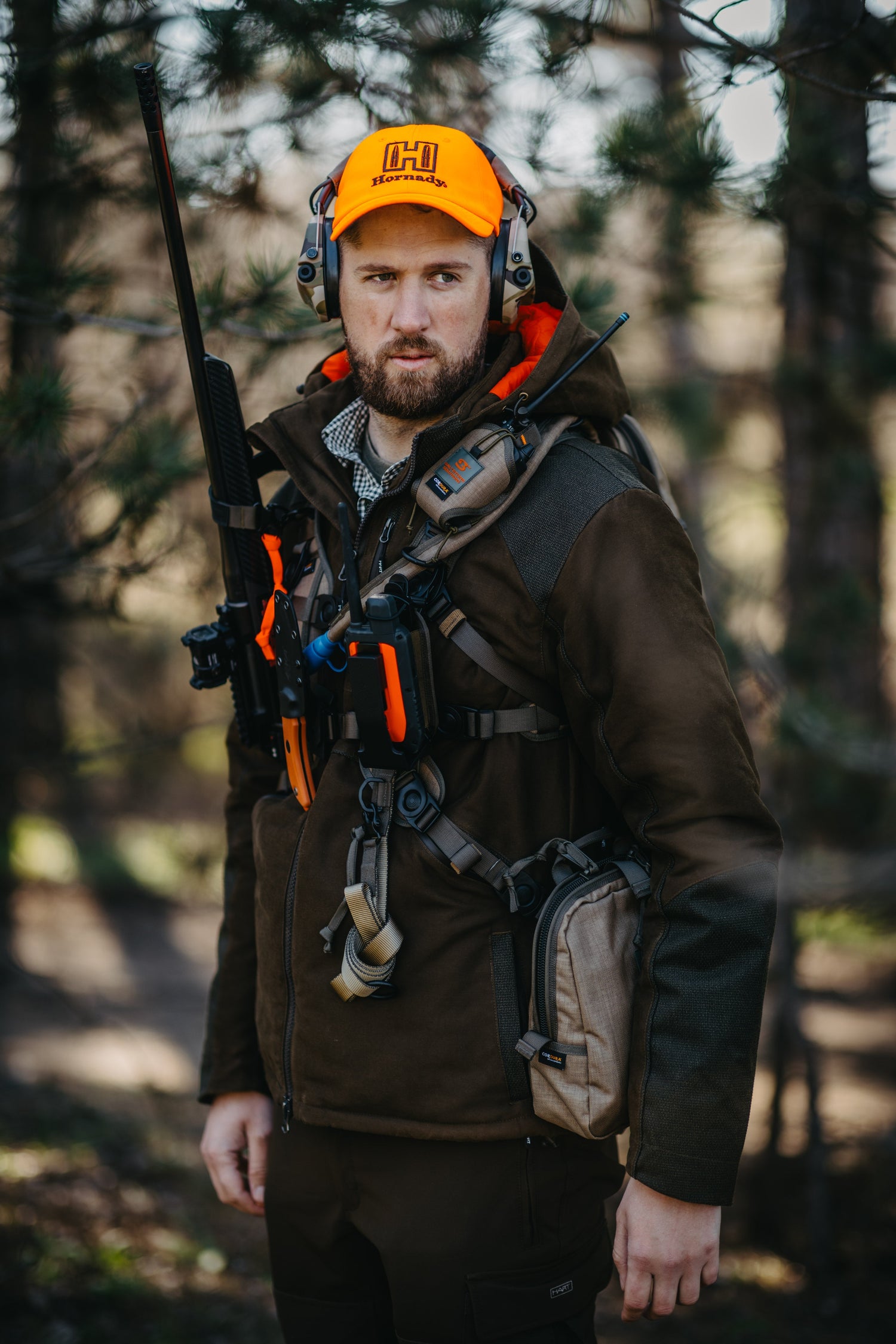
It is familiar, lightweight, and useful for short walks or simple setups. But once the hunt gets longer, rougher, or more gear-intensive, the limits of a basic sling start to show.
The rifle begins to swing. Shoulder fatigue builds. The sling slides or twists. Your hands keep reaching back to adjust the gun. Transitions to the shooting position become less consistent. Gear starts to interfere with natural movement.
That is when the question changes. It is no longer just “What sling should I use?”
It becomes “Is a sling enough for the way I actually hunt?”
A rifle sling is a simple way to carry a firearm. A rifle carry system is built to manage stability, weight distribution, hands-free movement, and fast access in real hunting conditions.
For short, lightweight hunts, a sling may still do the job. But for long walks, uneven terrain, heavier loadouts, upland hunts, predator setups, big game day hunts, and situations where both hands need to stay free, a structured rifle carry system gives hunters a more capable way to move through the field.
The Real Difference Between a Rifle Sling and a Rifle Carry System
The biggest mistake hunters make is judging a carry method while standing still.
A sling can feel fine in the truck, at camp, or during the first mile. The real test comes after hours of walking, climbing, stopping, glassing, crossing obstacles, and moving through brush.
That is when small problems become obvious:
-
a little rifle swing becomes constant movement
-
one-sided weight becomes shoulder and neck fatigue
-
a sliding sling becomes a repeated distraction
-
a slow mount becomes a missed opportunity
-
loose gear starts interfering with your stride
A rifle sling carries the rifle.
A rifle carry system manages how the rifle sits, moves, and comes to the shoulder while you are hunting.
That difference matters more the longer and harder the hunt gets.
|
Feature |
Rifle Sling |
Rifle Carry System / INTEGRATOR |
|
Weight distribution |
Mostly one shoulder |
Upper body load balance |
|
Hands-free movement |
Limited |
Yes |
|
Rifle stability |
Can swing or slide |
Stable holstered position |
|
Fast access |
Depends on sling position |
Repeatable quick release |
|
Gear organization |
No |
Modular add-ons |
|
Best for |
Short, simple hunts |
Long hunts, rough terrain, heavier loadouts |
Problem 1: Rifle Movement While Walking
One of the first signs that a carry setup is not working is uncontrolled rifle movement.
This usually happens when the sling is too loose, the rifle is not stabilized against the body, or the rest of your gear is shifting around while you move.
On flat ground, that may only be annoying. In the field, it can become a real problem.
A rifle that swings or bounces can:
-
make noise in brush
-
pull against your shoulder
-
force constant micro-adjustments
-
catch on clothing, straps, or branches
-
distract you from terrain, wind, dogs, or game movement
This matters during long upland walks, still-hunts through timber, predator setups, and any hunt where you are covering uneven ground.
A better carry setup should keep the rifle predictable without requiring you to constantly grab, lift, or adjust it.
Problem 2: Shoulder and Neck Fatigue
A traditional rifle sling usually puts most of the weight on one shoulder.
At first, that feels manageable. But after several hours, especially with a heavier rifle, optic, suppressor, or winter layers, that one-sided load starts to wear on you.
Common signs include:
-
shoulder pressure
-
neck tightness
-
posture imbalance
-
switching sides repeatedly
-
gripping the rifle to keep it from moving
This is not just about comfort. Fatigue affects how you move, how quickly you react, and how consistently you mount the rifle.
That is one reason many hunters start looking for a rifle sling alternative after long days in the field.
The SALTSTONE INTEGRATOR is built to solve this specific problem. Its patented 5-Point Load Balance Structure distributes rifle weight across the upper body, including both shoulders and the ribcage, instead of concentrating the load on one shoulder.
That helps reduce shoulder strain and makes long carries more manageable.
Problem 3: Slow or Inconsistent Access
In hunting, timing matters.
A bird flushes. A predator steps out. A deer gives you a narrow window. A shot opportunity may only last a few seconds.
With a basic sling, the rifle may not always be in the same position when you need it. The strap may be twisted, the rifle may be hanging at the wrong angle, or another piece of gear may be in the way.
That can lead to:
-
extra adjustment before mounting
-
inconsistent rifle orientation
-
slower transitions
-
unnecessary movement at the wrong time
A rifle carry system is designed to keep the rifle in a more consistent position while still allowing fast access.
The INTEGRATOR’s One Sec Ready quick-release system is designed to move the rifle or shotgun from holster to shoulder in less than a second. That matters when you need fast access, but it also matters because the movement is repeatable.
Any carry method should still support safe muzzle control and responsible firearm handling.
What a Rifle Sling Does Well
A rifle sling still has its place. For short, simple hunts with light gear and predictable terrain, it can be enough.
A sling works well for:
-
short hunts
-
simple terrain
-
lighter rifles
-
minimal gear
-
slower-paced hunting
-
hunters who prefer a traditional setup

It is also lightweight, low-profile, inexpensive, and familiar.
For some shooting positions, a sling can even help stabilize the rifle when used properly.
The limitation is that a sling is not a complete load-management system. It does not organize your other gear, distribute weight across the upper body, or keep the rifle fixed in one consistent position during long movement.
That is where a rifle carry system becomes different.
What a Rifle Carry System Changes
A rifle carry system changes the relationship between the rifle, your body, and the rest of your gear.
Instead of letting the rifle hang from one shoulder, it integrates the rifle into a larger carry structure. That structure can help control movement, spread weight, and keep important gear positioned where you need it.
A good rifle carry system can provide:
-
better weight distribution
-
less rifle swing while walking
-
more stable rifle positioning
-
hands-free movement
-
faster and more repeatable access
-
less shoulder fatigue during long hunts
-
better integration with packs, pouches, optics, and other gear
Hands-free movement becomes especially valuable when you are climbing, glassing, crossing ditches, opening gates, handling dogs, dragging game, or moving through difficult terrain.
The SALTSTONE INTEGRATOR is a hands-free rifle carry system and modular hunting vest built around this idea. It carries rifles and shotguns, including scoped rifles, and lets hunters configure modular add-ons around the hunt.
Instead of treating the rifle as a separate object hanging off the shoulder, the INTEGRATOR makes it part of a unified loadout.

Rifle Sling vs Rifle Carry System in Real Hunting Conditions
Upland Bird Hunting
A sling can work for short upland hunts, especially with a light shotgun and simple terrain. But during full-day pheasant or quail hunts, constant walking can make shoulder fatigue and gun movement more noticeable.
A carry system helps by keeping both hands free, reducing shoulder strain, and keeping the shotgun stable while you move through fields, grass, ditches, and cover.
Dense Cover or Timber
In brush, timber, and tight cover, a loose sling can shift, snag, or let the rifle hang at an awkward angle.
A structured carry system keeps the firearm closer and more controlled, which can reduce interference while moving through tight terrain.
Predator Hunting
Predator hunting often involves moving between stands, carrying optics, calls, sticks, packs, and sometimes a heavier scoped rifle.
A sling may be fine for shorter walks. But when you are covering more ground or managing more gear, a carry system can help reduce fatigue and keep the rifle in a predictable position for faster setup.
Big Game Day Hunts
On big game day hunts, the rifle may be carried for hours before it is used. Add elevation changes, glassing stops, weather layers, and a backpack, and a basic sling can become tiring.
A rifle carry system helps manage the long carry while keeping the rifle accessible when the hunt changes quickly.
How to Choose the Right Setup
The decision is not about which system looks better. It is about how you actually hunt.
A traditional rifle sling is usually enough if:
-
your hunts are shorter
-
terrain is predictable
-
your rifle is relatively light
-
your gear load is minimal
-
you do not need both hands free often
-
fast transitions are less critical
A structured rifle carry system becomes more valuable if:
-
you hunt full days
-
terrain changes constantly
-
your rifle or optic setup is heavier
-
your sling causes shoulder or neck fatigue
-
you need both hands free
-
you carry extra gear
-
you want faster, more repeatable access
-
you hunt upland birds, big game, predators, or rough terrain
Most hunters do not outgrow their rifle. They outgrow the limits of carrying it from one shoulder all day.
Upgrade the Carry Method, Not the Rifle
A rifle sling is simple, familiar, and useful. But once the hunt gets longer, rougher, or more gear-intensive, the limits of one-shoulder carry become harder to ignore.
Swing, fatigue, slipping straps, inconsistent rifle position, and limited hands-free movement are not just minor annoyances. They affect how comfortably you move, how quickly you react, and how ready you feel when the hunt changes.
That is where a rifle carry system becomes the better tool.
The SALTSTONE INTEGRATOR is built for hunters who need more than a basic sling. It distributes firearm weight across the upper body, keeps both hands free, holds the rifle or shotgun in a stable position, supports fast access with the One Sec Ready quick-release system, and gives you a modular platform for organizing the rest of your loadout.
For long walks, rough terrain, upland hunts, predator setups, big game day hunts, and any hunt where rifle carry starts affecting comfort or readiness, the INTEGRATOR gives you a more stable and capable way to move through the field.
Explore the SALTSTONE INTEGRATOR to see how a hands-free rifle carry system works in real hunting conditions
FAQ
What is the difference between a rifle sling and a rifle carry system?
A rifle sling is a simple strap used to carry a rifle on your body. A rifle carry system uses a larger structure, such as a vest or harness, to manage rifle position, weight distribution, hands-free movement, gear organization, and access in the field.
Why does my rifle sling swing while I walk?
A rifle sling often swings when it is too loose, when the rifle is not stabilized against the body, or when other gear shifts during movement. Uneven terrain, brush, and long walks can make that movement more noticeable.
Is a rifle sling enough for hunting?
A rifle sling can be enough for short hunts, simple terrain, lighter rifles, and minimal gear. But once you are walking longer distances, moving through uneven terrain, carrying more gear, or dealing with shoulder fatigue, a sling can become limiting. A structured rifle carry system like the SALTSTONE INTEGRATOR gives you better weight distribution, more stable firearm positioning, hands-free movement, and faster, more repeatable access.
What are the advantages of a rifle carry system?
A rifle carry system gives hunters more control over how the rifle moves, carries, and comes to the shoulder. The SALTSTONE INTEGRATOR improves weight distribution, reduces rifle swing, keeps both hands free, organizes modular gear, and supports fast access with the One Sec Ready quick-release system. It is designed for hunters who need more stability and capability than a basic sling can provide.
Do I need a rifle carry system for upland hunting?
Not always. For short upland hunts, a sling may be enough. But during full-day pheasant, quail, or other upland hunts, a carry system can help reduce shoulder fatigue, keep the shotgun stable, and free both hands while moving through cover.
Can the SALTSTONE INTEGRATOR carry shotguns too?
Yes. The INTEGRATOR works with long guns, including rifles and shotguns, with or without scopes. That makes it useful for upland hunting, turkey hunting, big game hunting, predator hunting, and other field situations.