
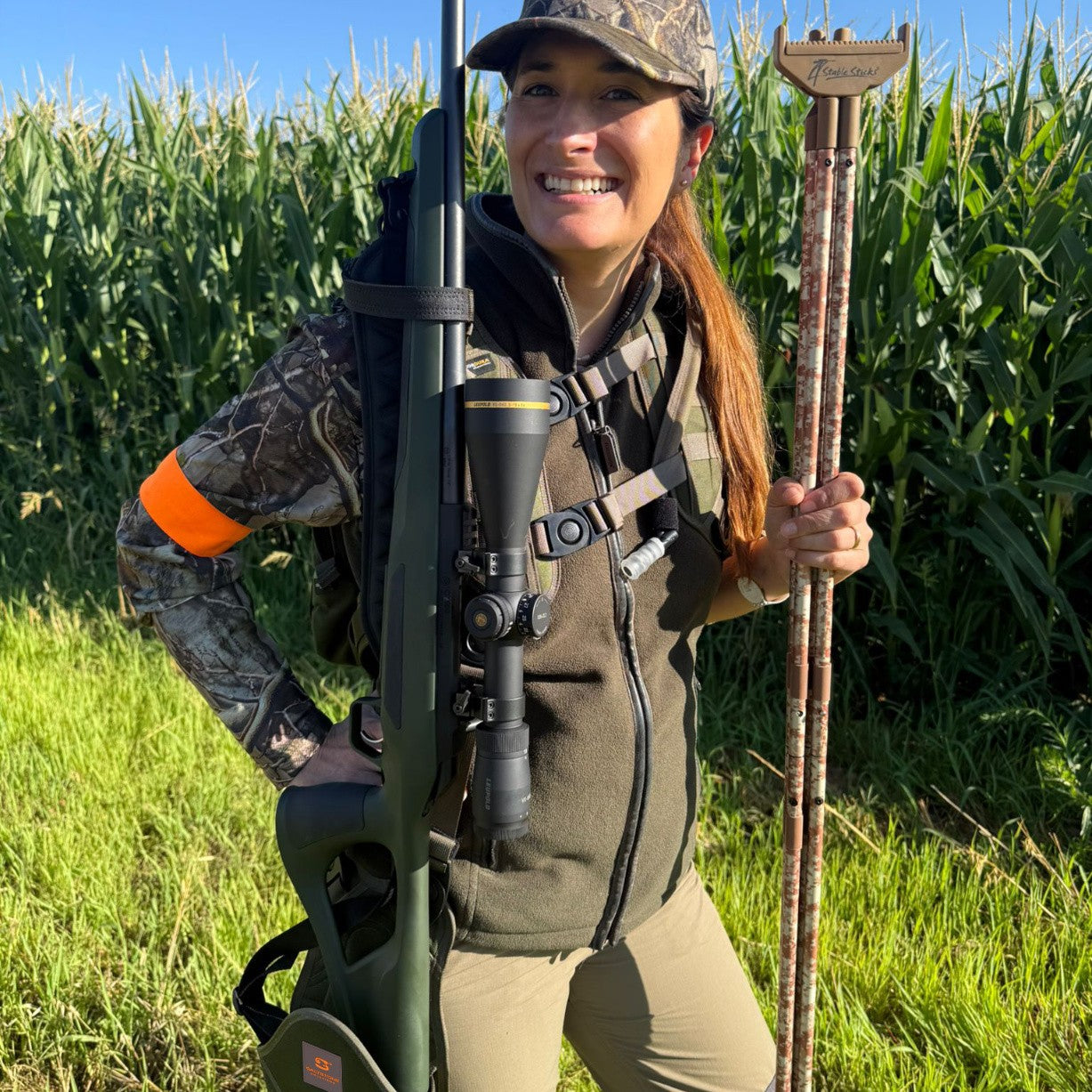
Spot-and-stalk hunting usually does not fail at the moment of the shot. It often fails earlier - while you are moving, glassing, managing gear, watching the wind, and trying to close distance without being detected.
The best spot-and-stalk hunting gear setup includes quality optics, stable rifle carry, balanced load carry, quiet clothing, terrain-appropriate boots, navigation tools, wind indicators, and only the gear you can move with quietly.
The key is not buying more gear. It is building a system where every piece supports quiet movement, fast access, and control in real terrain.
Why Spot-and-Stalk Hunts Often Fail Before the Shot
Spot-and-stalk hunting is different from stand hunting.
You are not sitting still and waiting for the animal to come to you. You are constantly making decisions: when to move, when to stop, when to glass, when to wait, how to use terrain, and how to stay out of the animal’s sight, scent, and hearing.
That is where gear starts to matter.
Common failure points include:
-
gear that shifts, bounces, or makes noise while walking
-
loose straps, buckles, or clothing that rubs in brush
-
poor weight distribution that drains energy over distance
-
a rifle sling that slips or swings at the wrong time
-
tools buried too deep in a pack
-
slow transitions when game finally appears
-
loss of balance on uneven ground
These problems do not always ruin a stalk immediately. They build over time. After a few miles, fatigue increases, movement gets sloppy, and your setup starts costing you attention.
In spot-and-stalk hunting, the less you fight your gear, the more attention you can give to wind, terrain, animal behavior, and shot opportunity.
What Makes a Spot-and-Stalk Gear Setup Work
A good stalking setup comes down to four things.
-
Movement Efficiency
Your gear should let you move naturally.
Every time you stop to fix a strap, reposition a rifle, dig for a tool, or rebalance your pack, you lose time and increase your chance of being detected.
Efficient gear is not always the lightest gear. It is the gear that stays where it belongs while you move.
-
Stability Under Motion
Your setup should minimize loose movement, bounce, and shifting.
A pack that slides, a rifle that swings, or loose gear that taps against buckles can create noise and throw off balance. This matters even more when you are side-hilling, crawling, climbing, crossing deadfall, or moving through brush.
-
Quiet Operation
Noise ends close-range stalks.
Common noise sources include:
-
fabric friction
-
loose buckles
-
zippers
-
rifle sling movement
-
pack shifting
-
hard gear knocking against other hard gear
A good setup controls these before they become problems.
-
Fast Readiness
When game appears, you may not have much time.
That does not mean rushing or ignoring safety. It means your rifle, rangefinder, wind checker, and other essentials should be easy to access without unnecessary movement or digging.
The less you have to adjust, search, or reorganize, the better.
Best Spot-and-Stalk Hunting Gear Setup: The Core System
A proper setup is not just a checklist. It is a connected system where each piece supports the way you move.
Optics for Spot-and-Stalk Hunting
Spot-and-stalk hunting starts with observation, not movement.
The more you can learn from a distance, the less you have to move blindly. That means fewer chances to skyline yourself, cross open ground at the wrong time, or push into the wind without a plan.
A solid optics setup can include:
-
binoculars for scanning terrain
-
a rangefinder for confirming distance
-
a spotting scope for long-range glassing in open country
-
a tripod or shooting stick when the terrain and hunt call for it
Keep optics accessible, but secure. A rangefinder should ride in a pouch or harness that allows fast access without bouncing. If you use a compatible Garmin handheld GPS, the SALTSTONE GPS Holster can keep it chest-mounted and visible without digging through pockets.
Load and Rifle Carry: The Foundation of the Setup
How you carry your load affects everything else in a spot-and-stalk hunt.
If your pack shifts, your shoulder gets tired, or your essential tools are buried too deep, your stalk becomes harder before you ever get close to the animal. You move less naturally, make more adjustments, and lose attention that should be focused on wind, terrain, and animal behavior.
A good load carry setup should distribute weight comfortably, keep important tools accessible, reduce shifting during climbs and side-hills, and let you add or remove gear based on the hunt.
This is where a modular hunting vest can make sense - The SALTSTONE INTEGRATOR gives hunters a platform for building the loadout around the hunt instead of carrying the same setup every time. Its patented 5-Point Load Balance Structure helps distribute weight across the upper body, including both shoulders and the ribcage, so your setup feels more balanced while you move.
For compact storage, the 5L Pack adds 5L / 305 cu of capacity and can mount in six positions on the INTEGRATOR, including the chest, back, and sides. For shotgun hunters, the Anti-Spill Ammo Pouch holds 30 pieces of 12 gauge shells and allows quick one-hand access.
The goal is not to carry more gear. It is to carry the right gear in a way that stays balanced, quiet, and accessible while you move.
Rifle Carry: The Most Overlooked Failure Point
Your rifle or shotgun is one of the most important tools in your setup. It can also be one of the biggest sources of problems during a stalk.
A basic sling can work on short approaches or simple terrain. But in real stalking conditions - hills, brush, climbs, crawls, deadfall, and long side-hills - a loose sling often creates problems.
Common issues include:
-
Rifle swing while walking
-
Sling slip during climbs or descents
-
Shoulder fatigue over distance
-
Extra movement before shouldering the rifle
-
Interference with a pack, bino harness, or other gear
If your rifle moves like a separate object, you spend energy controlling it. That energy should be going into wind, terrain, and animal movement.
The INTEGRATOR addresses this by securing the rifle or shotgun in a stable holstered position while keeping both hands free. Its patented 5-Point Load Balance Structure distributes firearm weight across the upper body instead of concentrating it on one shoulder like a traditional sling.
That matters when you are glassing, climbing, crawling, crossing obstacles, checking wind, or handling other gear. The rifle stays close and controlled, so you can move with less adjustment and less unnecessary motion.
When it is time to shoulder the firearm, the One Sec Ready quick-release system is designed to move from holster to shoulder in less than a second.
Always keep safe muzzle control and responsible firearm handling first.

Clothing: Your Silent Movement Layer
Clothing is not just weather protection. It directly affects how quietly you move.
A proper stalking clothing system should include:
-
quiet outer layers with low-friction fabric
-
breathable base layers for sustained movement
-
wind and rain protection when conditions demand it
-
camouflage or earth-tone colors that match terrain and season
-
enough layering flexibility to avoid overheating during climbs
Close-range stalking punishes noisy clothing. If your jacket crinkles every time you raise your arms, or your pants scrape loudly in brush, the problem is not your stalking skill. It is your clothing system.
Footwear: Control From the Ground Up
Footwear is one of the most underrated parts of spot-and-stalk hunting.
Your boots affect balance, noise, traction, and fatigue. In stalking terrain, bad footwear can make every step louder and less stable.
Look for:
-
ankle support matched to your terrain
-
reliable grip for rock, mud, snow, or loose soil
-
quiet sole behavior on the ground you hunt
-
enough cushioning for long-distance movement
-
a fit that prevents hot spots and blisters
Without reliable footwear, even the best upper-body gear setup loses effectiveness.
Navigation, Wind, and Awareness Tools
Efficient stalking depends on knowing where you are, where the animal is likely to move, and what the wind is doing.
Useful tools include:
-
GPS or mapping device
-
compass as a backup
-
wind indicator
-
headlamp or small light
-
basic survival essentials
-
knife or multitool
-
water and compact nutrition
A mapping device can help reduce aimless movement, but wind discipline is just as important. Check wind and thermals often, especially when changing elevation or moving into draws, ridges, and basins.
Keep frequently used tools accessible. Gear buried deep in a pack often does not get used when it matters.
Common Spot-and-Stalk Gear Mistakes
Most gear failures come from poor system design, not poor gear quality.
Common mistakes include:
-
carrying too much gear
-
using a loose rifle sling that swings with every step
-
burying important tools in a pack
-
ignoring wind indicators
-
choosing clothing for warmth but not quietness
-
packing weight unevenly
-
letting hard items knock together
-
buying gear one piece at a time without thinking about how it works together
Spot-and-stalk hunting rewards efficiency, not volume of equipment.
If an item does not help you move quietly, see better, stay comfortable, or access essentials faster, it probably does not belong in your setup.
Build Your System Around How You Move
The real takeaway is not about owning more gear. It is about building a system that lets you move better.
In spot-and-stalk hunting, every extra adjustment costs attention. A shifting pack, swinging rifle, noisy strap, buried tool, or tired shoulder can make the stalk slower, louder, and less controlled.
When your rifle is stable, your load is balanced, your clothing is quiet, your boots match the terrain, and your tools are within reach, you stop fighting your equipment and start focusing on the stalk.
That is exactly where the SALTSTONE INTEGRATOR fits. It gives hunters hands-free rifle or shotgun carry, better weight distribution, fast access, and modular add-ons that adapt to different terrain, seasons, and hunting styles.
For spot-and-stalk hunters, the INTEGRATOR is not just another piece of gear. It is the platform that helps connect the rest of the setup.
Explore the full SALTSTONE modular hunting system, starting with the INTEGRATOR and the add-ons that match your style of hunt.
FAQ
What is the best gear setup for spot-and-stalk hunting?
The best spot-and-stalk hunting gear setup includes optics, stable rifle carry, balanced load carry, quiet clothing, proper footwear, navigation tools, wind indicators, and basic survival essentials. The goal is to move quietly, stay balanced, and keep important gear accessible.
Why do most hunters struggle in spot-and-stalk hunting?
Many spot-and-stalk failures happen before the shot. Common problems include poor wind discipline, noisy gear, unstable rifle carry, poor weight distribution, fatigue, and slow access to tools when the opportunity appears.
Do I need a special rifle carry system for spot-and-stalk hunting?
For serious spot-and-stalk hunting, a structured rifle carry system can be a major advantage. A basic sling may work for short approaches, but uneven terrain, long stalks, crawling, climbing, glassing, and wind-checking all expose the limits of one-shoulder carry. The SALTSTONE INTEGRATOR keeps the firearm stable, distributes weight across the upper body, leaves both hands free, and supports fast access after a safe release.
What is the most important part of a spot-and-stalk hunting setup?
Optics, rifle carry, footwear, and wind awareness are all critical. If one part fails, the whole stalk can suffer. The best setup is a system where your rifle, load, clothing, boots, and tools work together instead of creating noise or extra movement.
How do you stay silent while spot-and-stalk hunting?
Staying silent comes from controlled movement and good gear choices. Use quiet clothing, secure loose straps, prevent hard gear from knocking together, keep your rifle stable, and move according to wind, terrain, and animal behavior.