
Shoulder fatigue rarely shows up right away. It builds as the miles go on.
Most hunters assume the problem is just the weight of the rifle. But often, the bigger issue is how that weight is carried. A traditional sling is simple and useful, but it still concentrates most of the load on one side of the body. Over a long hunt, that can lead to sore shoulders, neck tightness, and constant readjustment.
Here is what is usually happening - and how to carry smarter.
Why Your Shoulder Gets Tired Carrying a Rifle
When you carry a rifle or shotgun for hours, your shoulder is not just holding weight. It is also helping stabilize the gun while you walk, climb, turn, crouch, and move through uneven terrain.
That strain usually builds from a few small problems stacking up.
Staying in One Carry Position Too Long
One of the fastest ways to create shoulder fatigue is to rely on one carry position all day.
Even if the rifle does not feel heavy at first, a sling keeps pressure concentrated on one shoulder. Small changes in sling tension, rifle angle, or body posture can shift more load onto one side. Over several hours, that adds up.
This is especially noticeable on long still-hunts, big-game day hunts, and upland hunts where you are covering ground without many breaks.
A Sling That Moves Too Much
A rifle sling should keep the gun stable, but not every sling setup does that well for every hunter.
If the rifle swings, slides, or pulls away from your body, your shoulder and upper back keep making small corrections. Those micro-adjustments may not feel like much at first, but over a full day they can create steady fatigue.
Uneven Terrain Makes It Worse
Flat ground is one thing. Hillsides, creek bottoms, brush, snow, mud, deadfall, and rocky trails are different.
When footing gets uneven, your body works harder to balance. If your rifle is also pulling on one shoulder or shifting around, that extra movement makes the carry feel worse as the day goes on.
Fatigue Changes Your Posture
As you get tired, your posture changes. You may lean slightly, tense one side of your neck, hike a shoulder, or grip the rifle more often to keep it from moving.
That is when a rifle that felt manageable in the morning starts feeling heavier in the afternoon.
How to Reduce Shoulder Fatigue While Carrying a Rifle
The good news is that rifle carry fatigue usually does not require one single fix. A few practical changes can make the rifle feel easier to manage over distance.
Adjust Your Sling Setup
Start with the basics.
A properly adjusted sling should keep the rifle close enough to your body that it does not swing or pull away with every step. If the rifle rides too low or too loose, your shoulder has to work harder to control it.
Try shortening the sling slightly so the rifle sits closer and moves less. You can also experiment with different carry positions depending on terrain, clothing layers, and whether you need faster rifle access.
A better sling setup can help. But even a well-adjusted sling still puts most of the load on one side of the body.
Switch Carry Positions Regularly
If you use a traditional sling, do not stay in one position all day.
Alternate between shoulder carry, cross-body carry, hand carry, or other safe carry positions depending on the terrain and hunting situation. Changing positions lets different muscles share the load and gives your shoulder a break before soreness builds.
This matters on long walks, steep climbs, and slow hunts where you may carry the rifle for hours before taking a shot.
Always keep muzzle control and firearm safety first when changing carry positions.
Rethink How the Weight Is Distributed
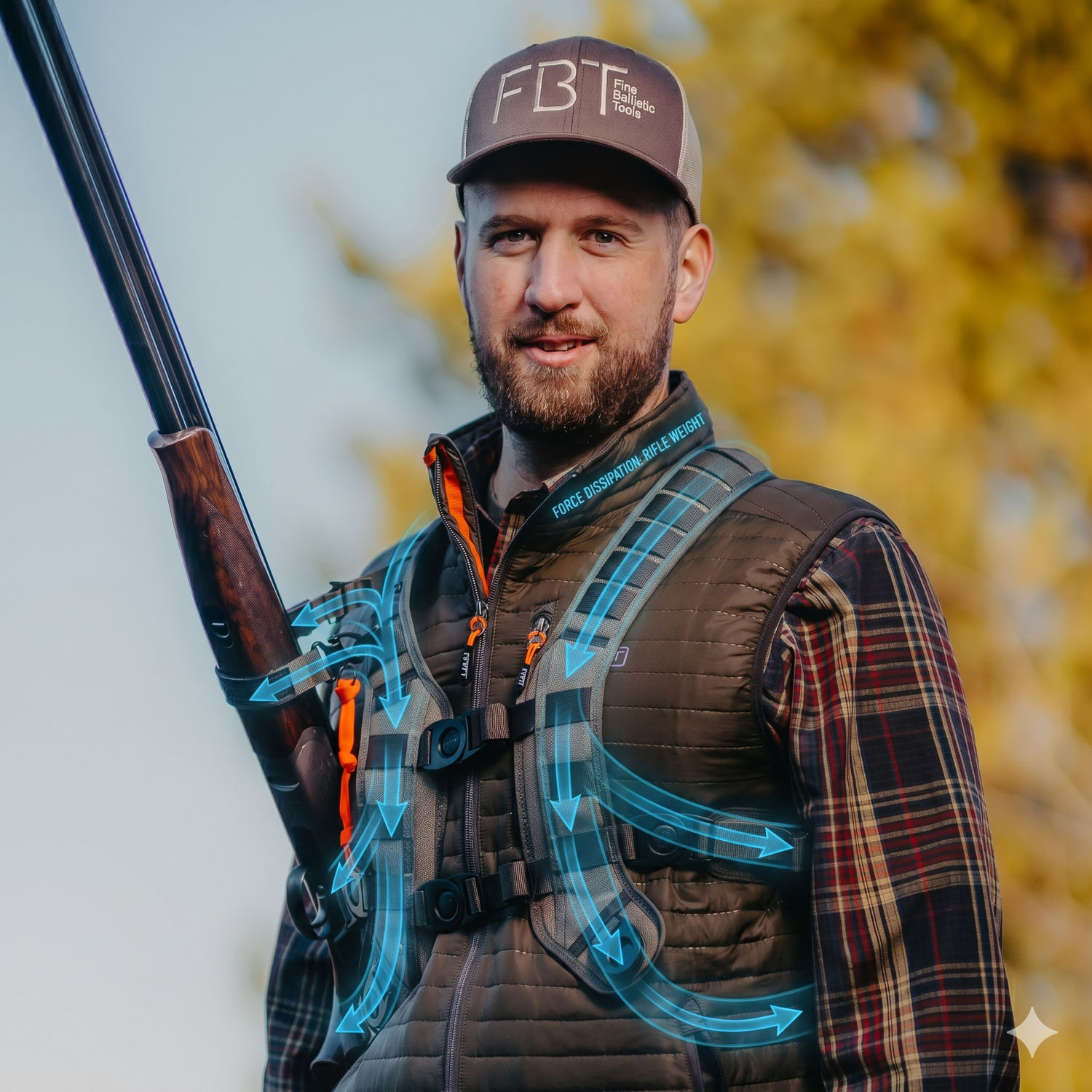
The biggest improvement often comes from changing how the rifle’s weight sits on your body. Most traditional sling setups concentrate weight on one shoulder. That is why soreness tends to show up in the same place over and over.
The SALTSTONE INTEGRATOR is built around a different idea.
It is a hands-free rifle carry system and modular hunting vest that uses a patented 5-Point Load Balance Structure to distribute rifle weight across the upper body, including both shoulders and the ribcage. Instead of letting the rifle hang from one shoulder, the INTEGRATOR spreads the load through the vest structure.
That helps reduce concentrated shoulder strain during long days in the field.
The rifle also rides in a stable holstered position, which means less swinging, less gripping, and fewer constant adjustments while you move. When you need to shoulder the rifle, the quick-release system is designed to go from holster to shoulder in less than a second.
Both hands stay free while you are hiking, glassing, climbing, handling gear, or helping another hunter.

Add Gear Without Creating a Messy Loadout
Shoulder fatigue is not only about the rifle. It is also about the rest of your gear.
Ammo, small tools, calls, rangefinders, radios, and extra layers can all create imbalance if they are hanging from random pockets, loose straps, or one side of your body.
The INTEGRATOR is modular, so you can attach compatible add-ons directly to the same system and build your loadout around the hunt.
Useful add-ons include:
-
5L Pack for compact extra storage
-
Anti-Spill Ammo Pouch for quick access to shotgun shells
-
GPS Holster for compatible Garmin handhelds
-
Radio Holster
-
Tripod Holster
-
Game Pouch for birds and small game
The goal is not to carry more for the sake of carrying more. It is to keep the gear you need organized, secure, and positioned where it makes sense.
Build the Endurance to Back It Up
Better gear and better technique help, but conditioning still matters.
You do not need bodybuilder strength to carry a rifle comfortably. What helps most is endurance in the shoulders, upper back, grip, and core - the areas that keep your posture steady over long miles.
Simple training that can help includes:
-
farmer’s carries
-
rucking or weighted walking
-
band pull-aparts
-
face pulls
-
planks
-
dead bugs
The goal is not to carry more weight. It is to carry the same weight with less fatigue.
If you have sharp pain, numbness, tingling, or an existing shoulder injury, it is worth talking with a qualified medical professional before pushing through it.
Carry Smarter, Not Harder
Shoulder soreness from carrying a rifle is rarely caused by one thing. It usually comes from several small issues stacking up: one-sided load, sling movement, poor posture, terrain, fatigue, and gear imbalance.
A better sling setup helps. Switching carry positions helps. Conditioning helps.
But if the rifle is still hanging from one shoulder all day, the same problem keeps coming back.
The SALTSTONE INTEGRATOR is built for hunters who want a different way to carry: hands-free, stable, fast to shoulder, and designed to distribute rifle weight across the upper body instead of concentrating it in one spot.
Explore the INTEGRATOR or browse the full SaltStone modular system to build a setup around the way you actually hunt.
FAQ
Why does my shoulder hurt after carrying a rifle all day?
TShoulder soreness often comes from carrying the rifle’s weight on one side for too long. A traditional sling can concentrate load on one shoulder, while your upper back and shoulder keep making small corrections to stabilize the gun. Over hours and uneven terrain, that can lead to fatigue and discomfort.
What is the best way to carry a rifle on long hunts?
The best method depends on the hunt, terrain, and firearm. In general, avoid relying on one carry position all day. Adjust your sling properly, switch carry positions when safe, and consider a carry system that distributes rifle weight across more of the upper body instead of one shoulder.
Can a better sling reduce shoulder fatigue?
Yes, a properly adjusted sling can reduce swinging, slipping, and unnecessary pull. But even a good sling usually keeps much of the rifle’s weight on one shoulder. For long hunts, a load-distributing rifle carry system may reduce concentrated strain more effectively.
How does weight distribution help with rifle carry fatigue?
When rifle weight is spread across more of the upper body, no single shoulder has to carry the entire load. The SALTSTONE INTEGRATOR uses a patented 5-Point Load Balance Structure to distribute rifle weight through the vest structure, including both shoulders and the ribcage.
Does physical conditioning help with carrying a rifle?
Yes. Shoulder, upper back, grip, and core endurance can help you carry a rifle more comfortably over long distances. Farmer’s carries, rucking, band pull-aparts, face pulls, planks, and dead bugs can all support better carrying endurance.